Not All Shoes Need the Same Insole
An insole that works perfectly in a running shoe may not fit in a dress shoe. Insole selection involves matching the profile, thickness, and arch design to the shoe's existing geometry — rather than forcing a universal shape into every footwear type.
Running Shoes
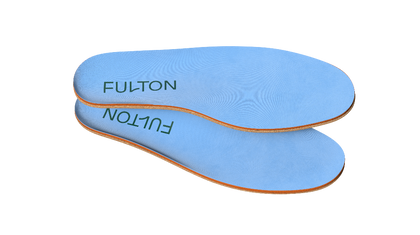
Running shoes already contain substantial cushioning and midsole technology. Adding a thick insole to a running shoe can raise the heel too high, change the shoe's stability properties, and compress fit. Athletic insoles designed for running shoes (like Fulton's Athletic Insole) are typically lower-profile and designed to complement rather than duplicate the shoe's existing cushioning. Focus on arch support rather than additional cushioning.
Casual Shoes and Sneakers
Casual shoes and flat-bottomed sneakers typically have thin, minimally supportive stock insoles. This is where a Classic profile cork insole provides the most functional benefit — the relatively flat factory insole is replaced with one that provides meaningful arch support without affecting shoe fit significantly. Most casual shoes have room for a 3-5mm insole without discomfort.
Dress Shoes and Loafers
Dress shoes are the hardest category for insoles because the last (the shoe's internal shape) is often narrow and low-volume. Half-length insoles that stop before the toe box work better than full-length insoles in tight-fitting dress shoes. Look for insoles with a slim heel cup and thin forefoot to preserve shoe fit.
Boots
Boots — work boots, cowboy boots, hiking boots — typically have the most volume for insoles. Full-length insoles fit comfortably in most boots, and the longer daily wear duration in boots makes arch support particularly valuable. Fulton's Classic Insole works well in most boot categories.
Signs You Need a Different Insole
If the insole causes your heel to feel raised or unstable, it's too thick for that shoe. If the insole folds at the arch or toe box, it's too long or rigid. If the arch feels hard rather than supporting, the arch height may be wrong for your foot — some people need lower or higher arch profiles than standard.
Discover more from Fulton or browse the full Fulton collection.