
Leisure Adventurously.
Heritage outdoor apparel from Lake Placid, NY. Carbon Beneficial™ alpaca/wool from New York farms, Italian cashmere, organic flannels named for Adirondack peaks. Small-batch, American-made, founded 2021.
The fiber lineup
Four families. All small-batch. All built for the cold side of upstate New York.
Named for the Adirondacks.
Every Adirondack Field flannel is named for a real place, river, or historical figure inside the 6-million-acre Adirondack Park. Some are obvious. Some you'd have to be a guide to know.
75% New York, head-to-hem.
The Wadhams line is the brand's commitment to a fully-domestic fiber loop: New York-raised wool from Carbon Beneficial™ certified farms, blended with New York-raised alpaca, spun in New York, knit in New York. The Skyward sweater is the founding piece — Ivory and Brown, 50/50 blend, single-ply 12-gauge.
Shop Wadhams knits →The lookbook
Eight frames from the field. Same family, eight settings.
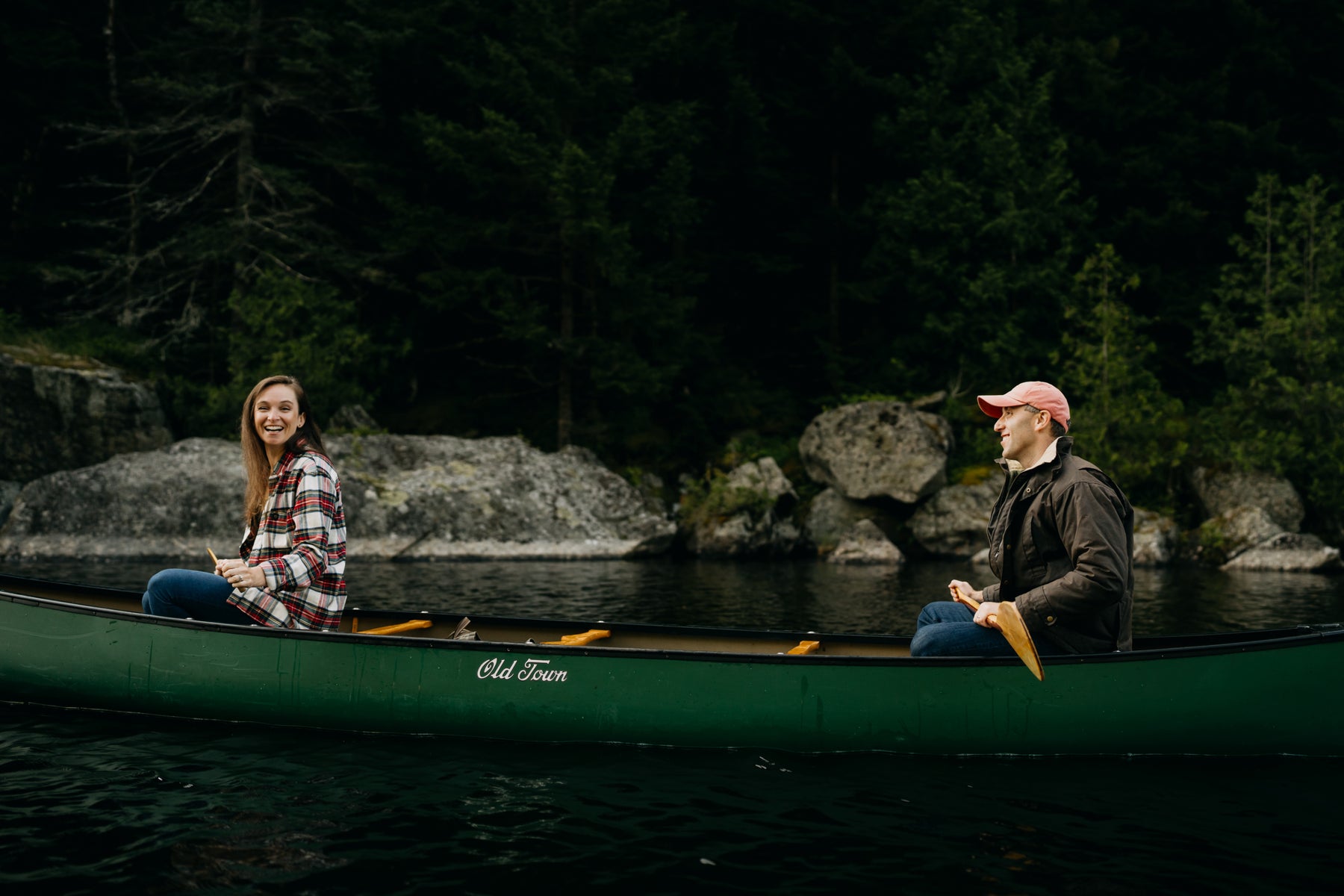
From a canoe on Lake Placid, 2021.
Dan came from technical-fabric work in the outdoor industry. Kaila came from small-batch apparel design. They moved their operation to Lake Placid — the village that hosted the 1932 and 1980 Winter Olympics and sits in the heart of Adirondack outdoor culture — and started with a single flannel.
The brand has stayed owner-operated. Dan and Kaila answer customer service emails, ship orders, and sign every flannel's hangtag. They publish factory partners, batch sizes, and farm origins on every product page.
Read the full story on adirondackfield.com →Frequently asked
Sourced from the brand's published pages + Curated Sense customer questions through April 2026.
What does 'Carbon Beneficial™' mean?
Carbon Beneficial Certified is a fiber-supply standard from the Savory Institute and Carbon Cycle Institute that audits regenerative grazing practices and verifies measured net carbon sequestration on the farm. To certify, a farm must have soil carbon levels measurably increasing over a 3-year baseline, livestock managed with rotational grazing, and no synthetic inputs. The Wadhams collection sources 75% of its fiber from these farms in New York State.
Why are the flannels all named for Adirondack place names?
It's a brand-coherence and credibility decision. The Adirondacks have a 200-year naming tradition tied to specific lakes, peaks, hamlets, and historical figures (guides, woodsmen, conservationists). Naming the Sacandaga flannel after the Sacandaga river, the Pine Knot flannel after Camp Pine Knot on Raquette Lake, the Nessmuk after George W. Sears (the 1880s woodsman who popularized lightweight canoeing) anchors the brand to a real region rather than abstract 'outdoor lifestyle' marketing.
Where are Adirondack Field clothes made?
American-made for the small-batch lines: the flannels are cut and sewn in Massachusetts and Pennsylvania, the cashmere is knit in Italy and finished in New York, the Wadhams alpaca/wool knits are 100% New York from farm to finish, and the wax jackets use British Halley Stevensons fabric tailored in Pennsylvania. Each product page lists country of origin for both fabric and finishing.
How small-batch is small-batch?
Most Adirondack Field releases are 50–500 units per colorway. The Wadhams Skyward sweater Ivory was a 240-unit run in 2024; the Brown was 200. Some flannel colorways have been one-and-done (e.g. the original Opalescent only had 80 units made). The brand publishes batch sizes on the product page when known and runs a waitlist when a SKU sells out.
What are the founders' backgrounds?
Dan and Kaila both worked in the apparel and outdoor industries before founding Adirondack Field in 2021 — Dan on the technical-fabric side, Kaila on the small-batch design and merchandising side. They moved their operation to Lake Placid (the village hosts the Olympic Training Center and is the historical heart of Adirondack outdoor culture). The brand is owner-operated; they ship orders themselves.
Is the wax jacket re-waxable?
Yes. Halley Stevensons wax fabric (Made-in-Scotland, used by Barbour and most heritage brands) is designed to be re-waxed with the same dressing every 1–3 years depending on use. Adirondack Field sells the wax dressing kit ($24) and publishes a re-waxing instructional video. A properly maintained Copperas jacket should last 20+ years.