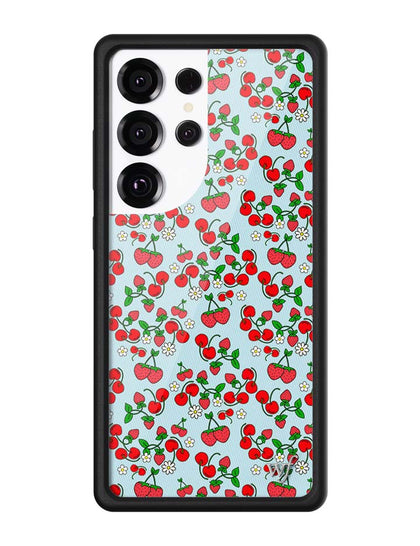
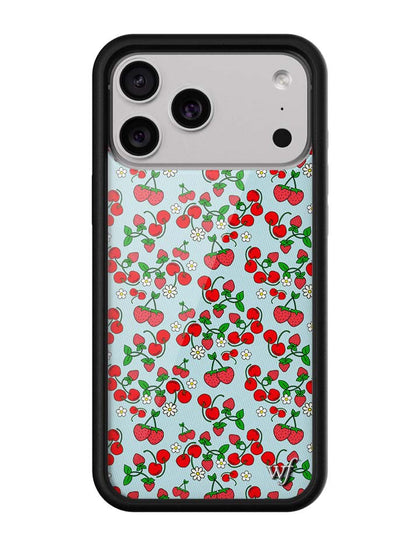
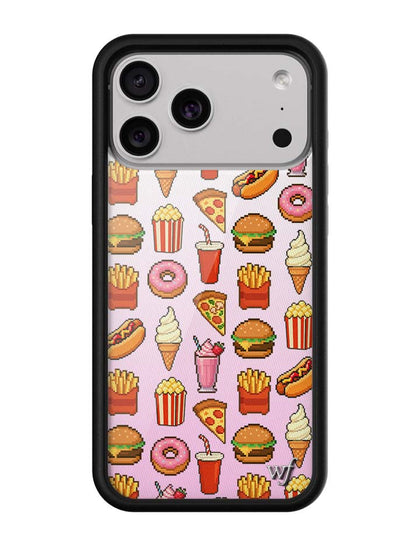
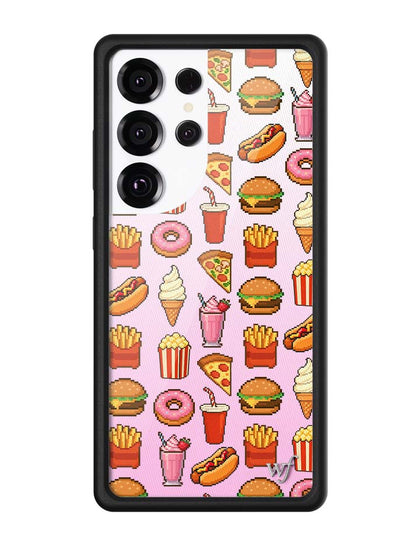
The phone case category splits roughly in half. On one side you have protective cases — OtterBox, Catalyst, Urban Armor Gear — engineered for MIL-spec drop ratings and rugged work environments. On the other side you have fashion cases — Wildflower, Casetify, small-batch designers — built around how the case looks, with protection as a secondary spec. Most people don't need to pick a side permanently; they need to match case to life. Here is what actually separates the categories, and when each one makes sense.
The materials — TPU, polycarbonate, rubber, and why it matters
Most cases in both tiers are built from two polymers: thermoplastic polyurethane (TPU) and polycarbonate (PC). The ratio of the two and how they are constructed is what differentiates a $37 case from a $70 case.
TPU is the flexible, rubbery material. It stretches, absorbs impact, and grips. It's the material that lets a case snap onto a phone and the material that cushions a drop. Alone, TPU is soft — it can get scratched, it can yellow over time, it can stretch if you leave a case off a phone for months.
Polycarbonate is the rigid, clear, scratch-resistant plastic. It's what hard-shell cases are made of. Polycarbonate resists scratching, holds its shape, stays clear if it's transparent. But it transmits impact — a pure polycarbonate case protects the screen and back from scratches but doesn't cushion a drop.
The common construction: TPU bumper (the edges, especially the corners) + polycarbonate back. The TPU handles the drops; the polycarbonate handles the looks. Both Wildflower's standard cases and Casetify's standard cases use this pattern. The specific tuning is where they differ.
MIL-STD-810 — what the drop ratings actually mean
You'll see "MIL-grade" or "MIL-STD-810" on protective case packaging. These are references to the US military's environmental testing standard, originally written for military equipment tolerances.
For phone cases, the relevant test is MIL-STD-810G Method 516.6 Procedure IV — the drop test. The protocol: drop the device 26 times from 48 inches (1.22m) onto 2-inch plywood over concrete, striking each face, edge, and corner. If the device remains functional after the 26 drops, it passes.
A case rated MIL-STD-810G has been tested to that specification. An OtterBox Defender, Catalyst Shield, or UAG Monarch carries the rating. A Wildflower or standard Casetify case does not — it isn't tested to that standard and isn't marketed as meeting it.
That does not mean a Wildflower case falls apart on the first drop. It means the brand is not claiming military-grade specifically. Most fashion cases protect against the everyday drops your phone actually experiences — a waist-height slip onto carpet, a counter-to-floor slide, a bag drop. They do not protect against dropping the phone onto concrete from a roof.
Apple's side of the equation
The iPhone 17 Pro has its own drop tolerance. Apple's design brief for the Ceramic Shield front panel (introduced with iPhone 12) specifically targeted face-down drop survival; independent drop testing has shown iPhone 17 Pro surviving 4-6 foot drops onto hard surfaces with no protective case, depending on the landing orientation.
What this means: modern iPhones are more drop-survivable out-of-the-box than iPhones of five years ago. A fashion case's job is not to make an unprotected phone bulletproof — it's to add a small additional buffer on top of Apple's own glass engineering, while also protecting the back panel from scratches and the camera lens from contact damage.
The four real-world drop scenarios
Honest breakdown of when each case tier matters:
Scenario 1 — The counter slide (1-3 feet onto wood/tile)
The most common phone drop. Any case category handles this. TPU bumper + polycarbonate back absorbs the impact; phone is fine. Wildflower = OtterBox in this scenario — both survive.
Scenario 2 — The waist-height bag drop (3-4 feet onto carpet/sidewalk)
Second most common. Still handled by most cases — the edge absorbs the contact. Corner drops are the riskiest; every case including MIL-spec ones has corner-strike vulnerability. Fashion case handles this fine in most landings.
Scenario 3 — The 5-7 foot shoulder drop (roofer, climber, rushed morning)
This is where the tiers start to differ. Fashion cases will often protect the phone on non-corner drops but risk corner fractures. MIL-spec cases are built to handle this — raised corner bumpers, internal shock-absorbing layers. If you regularly drop your phone from shoulder height onto hard floors, you want a protective case.
Scenario 4 — Industrial / construction / aggressive outdoor work
Fashion case is the wrong tool. You want a Catalyst Waterproof, OtterBox Defender Pro, or similar. These add waterproofing, dust sealing, and 10-foot drop ratings that fashion cases simply do not target.
What fashion cases DO protect better than protective cases
The upside of a Wildflower-tier case:
- Lens protection. The raised lip around the camera array on the iPhone 17 Pro Max in Wildflower's Pearl and Rhinestone cases is 0.5mm — comparable to protective cases, better than many bare cases. Your lens coating survives 1,000+ surface placements.
- Grip. TPU edges with textured finishes (like Wildflower's Rhinestone) actually reduce drops by making the phone harder to slip from your hand. This is a rarely-measured but real benefit.
- Pocket wear. Polycarbonate back resists the scratch-damage that wears down a bare or thin-case phone over 12-18 months in a pocket with keys and coins.
The price question — why a $37 fashion case vs a $70 protective case?
You are paying for two different things:
Protective cases ($50-$80): Engineering, testing, certifications. OtterBox runs every case through a standardized drop-test regime. They carry lifetime warranties. They are bulkier because the protection layer adds mass.
Fashion cases ($30-$50): Design, finishing, limited-edition premium. Hand-set stones (on rhinestone/pearl lines) add cost. Rare-drop exclusivity adds value. You are paying for the way the case looks and what it represents culturally, not for a military drop rating.
Both categories have margin, but the margin comes from different cost structures.
How to pick
Choose a protective case if: your work is outdoors or physical; you've broken two phones in the past three years; you want peace of mind; you don't prioritize how the case looks; you keep a phone for 3+ years.
Choose a fashion case if: your phone lives in bags, on desks, and in hands in mostly-indoor environments; you've had zero broken phones recently; style is part of the buying decision; you're comfortable with the everyday protection level of TPU+PC construction; you rotate cases.
Many people use two cases — a Wildflower for most days, and a protective case for specific contexts (hiking, travel, construction, beach). The good news is both can fit the same phone.
The quick version
- Fashion cases = TPU + polycarbonate, everyday drop protection, design-first.
- Protective cases = TPU + polycarbonate + extra shock-absorbing layer, MIL-STD-810 rated, utility-first.
- For typical drops (counter, bag, waist-height), either category protects the phone.
- For shoulder-height-plus drops onto hard surfaces, protective cases meaningfully outperform.
- Modern iPhones are glass-engineered to survive shorter drops without any case. The case is additive protection, not required.
- Grip, pocket wear, and lens protection are areas where well-designed fashion cases match or exceed protective cases.
- Most buyers want a fashion case most days and a protective case for specific rough contexts.
Related reading
- iPhone 17 Pro Max cases — the style buyer's guide.
- How to care for a rhinestone or pearl phone case.
Shop Wildflower Cases
- Butterfly Dreams iPhone Case — the signature
- Rhinestone Black iPhone Case
- Pearl Pink iPhone Case
- Full Wildflower collection
References
- MIL-STD-810G — Environmental Engineering Considerations and Laboratory Tests — Defense Acquisition University (accessed 2026-04-23)
- Thermoplastic polyurethane (TPU) mechanical properties — peer-reviewed review — PubMed / Polymers (accessed 2026-04-23)
- Polycarbonate impact resistance — material science review — ScienceDirect (accessed 2026-04-23)
- Apple iPhone 17 Pro environmental specifications — Apple (accessed 2026-04-23)
Discover more from Wildflower Cases or browse the full Wildflower Cases collection.
Frequently asked
What does "Phone Case Protection vs Style — What Actually Matters" cover?
This piece walks through the topic, context, and practical implications laid out in the article body above — focused on giving you a clear, sourced read rather than a quick listicle. Use it to deepen your understanding of the brand, category, or product family discussed.
Who is this article written for?
Readers shopping the brand or category covered, plus curious browsers researching independent makers stocked at Curated Sense. Both casual shoppers and trade buyers will find the same source-linked perspective.
How does Curated Sense vet the brands featured in journal articles?
Every brand in our journal has been onboarded directly: live inventory sync with the brand's own catalog, links back to the maker's own .com, and quality checks against return-rate, fulfillment-time, and customer-message-volume thresholds. We don't run sponsored placements in our journals.
Where can I shop the products discussed in this article?
Open the brand's collection or sub-collection page linked above to see current stock. Each product card opens a full Curated Sense product page with sizing, materials, the maker's own description, and the brand's live shipping policy.