
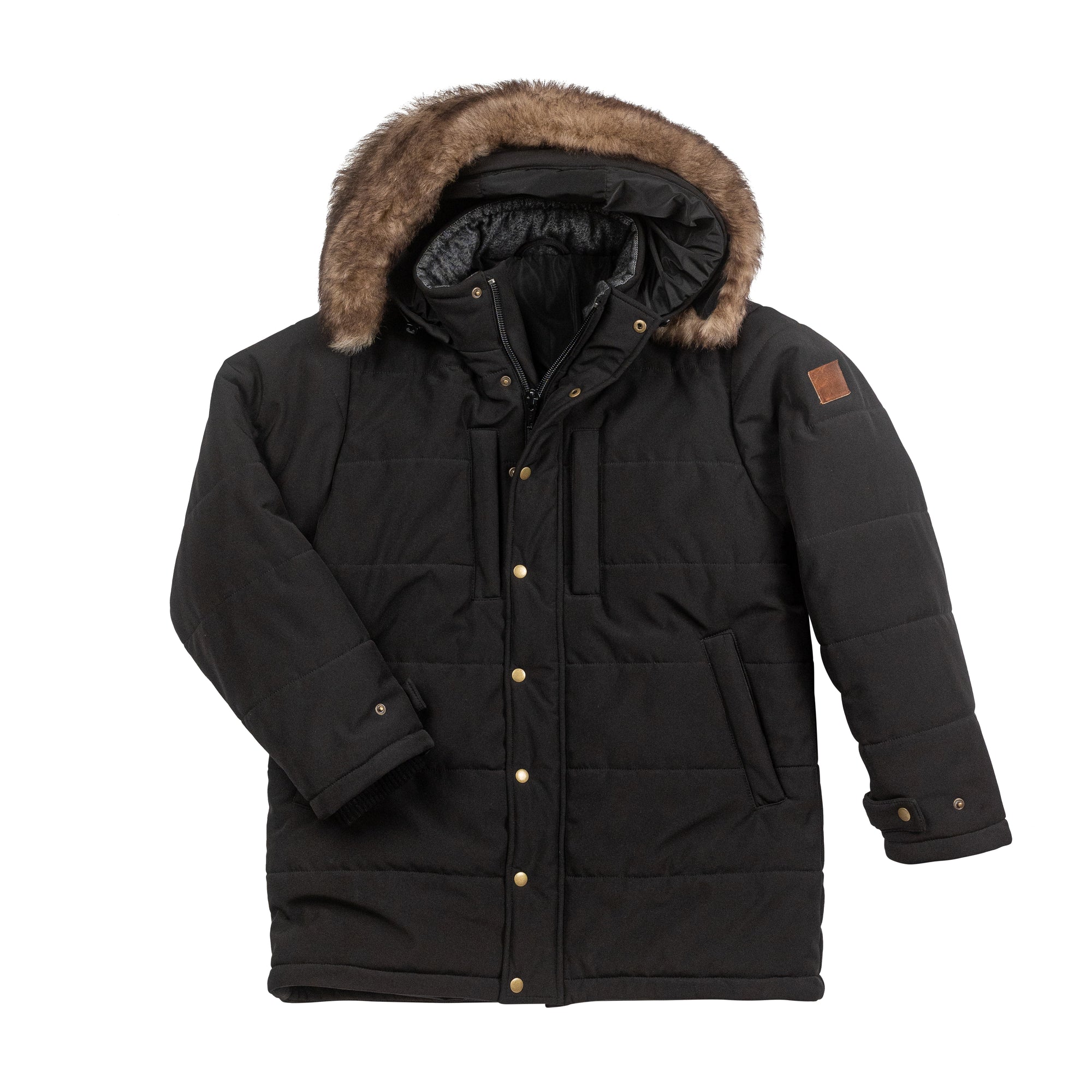
A waxed cotton jacket isn't a buy-and-wear product; it's a buy-and-maintain product. Done right, it'll outlast every synthetic shell in your closet. Done wrong, the wax cracks, the cotton wets through, and you're standing in the rain. Here's what to actually do.
What 'waxed cotton' actually is
Waxed cotton is plain-weave cotton (typically 6–10 oz/yard) impregnated with a paraffin-and-beeswax dressing. The wax fills the spaces between cotton fibers, displacing water and creating a hydrophobic barrier. Unlike synthetic membranes (Gore-Tex et al.), waxed cotton breathes — water vapor from your body still passes through, while liquid water beads off.
The dominant supplier of high-grade waxed cotton globally is Halley Stevensons, a Scottish mill founded 1864. Barbour, Filson, and most American heritage brands (including Adirondack Field's Copperas line) use Halley Stevensons fabric. The wax dressing is proprietary; the cotton is from rotating sources but most commonly Egypt or India.
The 18–36 month re-wax cycle
A new waxed jacket comes fully waxed and waterproof. Wear, friction (especially at elbows, cuffs, and the bottom hem), sun exposure, and wash cycles slowly strip the wax. Indicators it's time to re-wax: water no longer beads off (it absorbs in 1–3 seconds instead), the fabric looks dull and dry rather than slightly oily, and high-friction areas (elbows, cuffs) feel stiff or look pale.
Re-wax cadence depends on use. A jacket worn weekly in the rain needs re-waxing roughly every 18 months. A jacket worn 1–2x a month for fair-weather walks lasts 36 months. A jacket worn for hard outdoor work (ranch, fishing, daily commute on a motorcycle) might need it every 12 months.
How to re-wax (the actual process)
- Buy a wax dressing tin (Adirondack Field's is $24; Barbour's is $19; Halley Stevensons sells direct $22)
- Brush off any dirt with a stiff brush. Don't wash with detergent — it strips wax from inside.
- Warm the wax tin in a warm room or by a heater (NOT a microwave) until it's the consistency of soft butter — about 90°F
- Apply with a clean cotton cloth or a dedicated wax brush. Rub in firm circular motions, working from yoke to hem. Pay extra attention to seams, cuffs, and the inside of the collar.
- Once the entire jacket is coated, hang in a warm room (75–85°F) overnight. The wax melts into the fibers.
- Wipe off any visible excess wax with a clean cloth the next day. The jacket should feel slightly oily but not greasy.
- Don't wear the jacket near furniture (especially light upholstery) for the first 48 hours — residual wax can transfer.
When NOT to re-wax
Some failure modes can't be fixed with re-waxing. If the cotton itself has worn through (visible holes, threadbare patches, frayed cuffs), re-waxing won't help — the substrate is gone. If the seams have separated, re-waxing won't reattach them; you need the jacket re-stitched first. If the lining is shot but the shell is fine, re-wax the shell and have a tailor replace the lining ($60–120 typical cost).
The brand's official guidance is that a properly maintained Copperas wax jacket should last 20+ years, and customers have been quoted in interviews saying their fathers' Filson and Barbour wax jackets are 30–50 years old. The longevity is the value proposition; cheap wax jackets that aren't worth re-waxing are usually using a paraffin-only dressing on lower-grade cotton, and they fail in 3–5 years regardless of care.
A wax jacket is a 20-year purchase. Buy it once, re-wax it every couple of years, hand it down. That's the whole pitch.
Sources & citations
- Halley Stevensons. "Waxed Cotton — Heritage and Manufacturing." halleystevensons.com
- Filson. "Tin Cloth Care and Re-Waxing Guide." filson.com
- Barbour. "Reproofing Your Barbour Jacket." barbour.com
- Newman, M. (2018). The Heritage Outdoor Brand. Bloomsbury.
- Adirondack Field Copperas product page (re-waxing instructions). adirondackfield.com
Discover more from Adirondack Field or browse the full Adirondack Field collection.
Frequently asked
What does "Waxed Cotton Care: How to Re-Wax, When to Stop, and Why a Good Wax Jacket Lasts 20 Years" cover?
This piece walks through the topic, context, and practical implications laid out in the article body above — focused on giving you a clear, sourced read rather than a quick listicle. Use it to deepen your understanding of the brand, category, or product family discussed.
Who is this article written for?
Readers shopping the brand or category covered, plus curious browsers researching independent makers stocked at Curated Sense. Both casual shoppers and trade buyers will find the same source-linked perspective.
How does Curated Sense vet the brands featured in journal articles?
Every brand in our journal has been onboarded directly: live inventory sync with the brand's own catalog, links back to the maker's own .com, and quality checks against return-rate, fulfillment-time, and customer-message-volume thresholds. We don't run sponsored placements in our journals.
Where can I shop the products discussed in this article?
Open the brand's collection or sub-collection page linked above to see current stock. Each product card opens a full Curated Sense product page with sizing, materials, the maker's own description, and the brand's live shipping policy.